Shopping for art online, you will see three words over and over: original, print, and limited edition. Sellers use them loosely, sometimes honestly, sometimes not. Let me clear it up in plain language — the way I would explain it if you were standing in my studio.
What an original painting is
An original painting is the actual object the artist made. The canvas — or in my case sometimes a wood panel — that sat on the easel. The paint is on it. The brushstrokes are on it. The artist's hand touched it, and no machine was involved. There is exactly one of it in the world.
When I finished Three Fishes, a 48-by-48-inch oil on wood panel, that panel was the original. There is no second one. If a collector buys it, they take home that exact panel with every brushstroke I laid down.
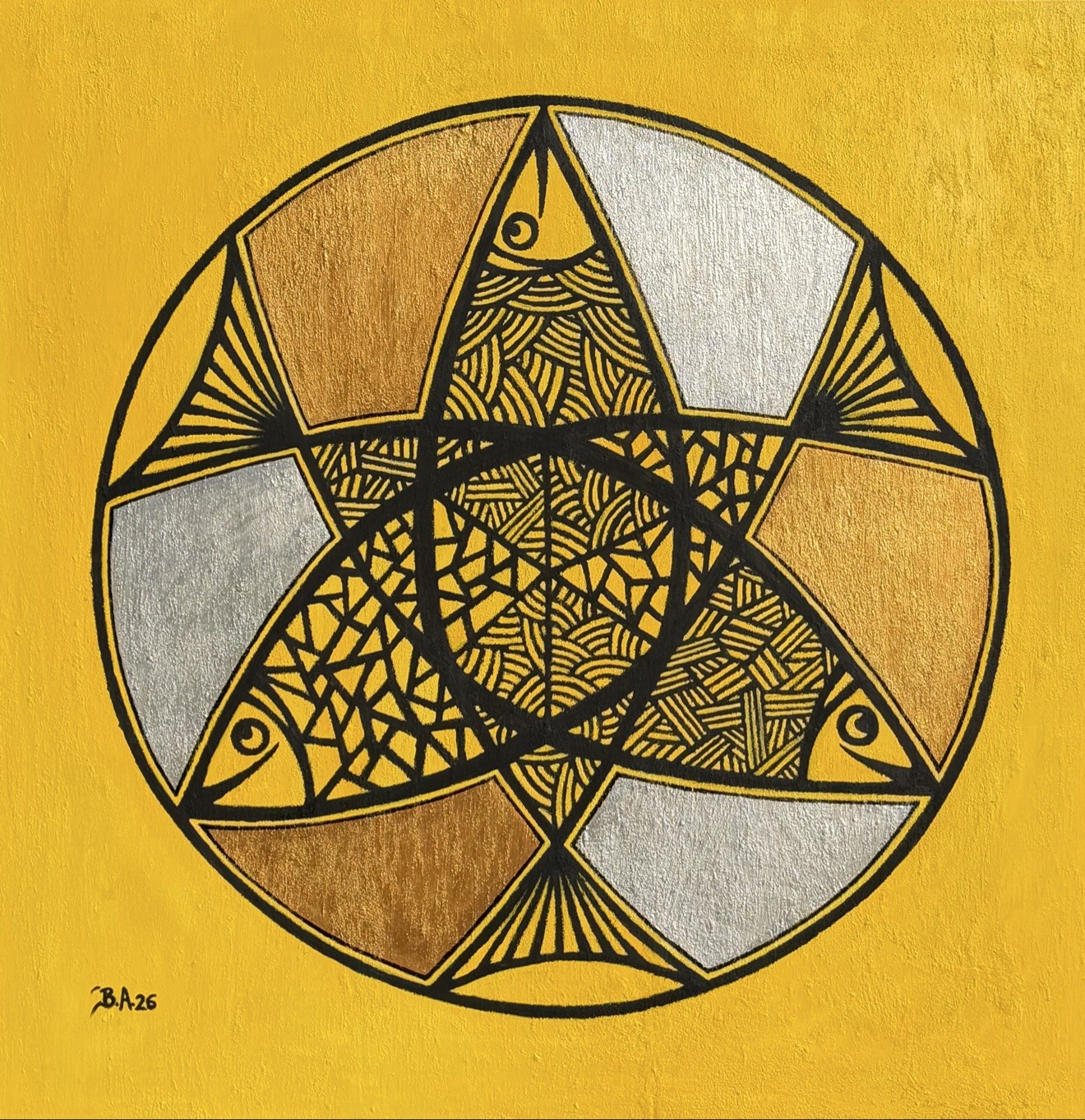
Everything about an original lives in the details: the thickness of the paint, the places where I pushed color hard and the places where I let it breathe. A camera flattens some of that. Standing in front of it, you can feel it.
What a print is
A print is a reproduction. The most common kind today is the "giclée," which is just a fancy word for an inkjet print on paper or canvas. A photograph of a painting gets printed, sometimes with a texture coating so it looks a little like paint, and then it is sold as decor.
Prints have a legitimate place. They let people enjoy an image for a modest price. But a print is not the painting. The brushstrokes you see are a photograph of brushstrokes. The texture is a photograph of texture. It will never hold value the way an original does, because more of them can be made tomorrow.
Here is the catch: some sellers describe prints in language that sounds like originals. Words like "canvas art," "wall art," or "abstract canvas" tell you almost nothing. If the listing never says the word "original," assume it is a print until the seller says otherwise.
What a limited edition is
A limited edition is a print with a promise: only a set number of copies will ever be made. "Edition of 50" means fifty prints, each numbered and signed. This is a real category — collectors of photography and printmaking know it well.
The honest version comes with the numbering on the piece itself ("12 of 50"), the artist's signature, and documentation. The dishonest version says "limited edition" but never says how many, or sells the same image from three different sellers with three different limits. A limit nobody enforces is not a limit.
The simple test: five questions to ask
Before you buy, ask the seller these five questions. An honest answer to all five almost always means you are getting what you think:
1. "Is this the original painting, or a reproduction?" This is the direct one. A real artist answers it gladly — I answer it gladly. 2. "How many of this piece exist?" The answer for an original is always "one." For a numbered edition, it should be a specific number. 3. "Can you show me a photo of the actual piece?" Not a mockup on a couch — the actual object. Look for visible brushstrokes and real edges. 4. "Is there a certificate of authenticity?" Every original should come with a signed certificate: title, dimensions, medium, year, and the artist's name. I sign one for every painting I sell. 5. "What is the medium and size?" "Original oil on canvas, 24 by 30 inches" is a real answer. Vague answers are a warning sign.
Why originals cost more
People sometimes ask why an original costs many times more than a print of the same image. It is simple: the original is the one thing that cannot be remade. A painting took weeks of work, years of practice, and a decision about color that the artist will never make exactly the same way again.
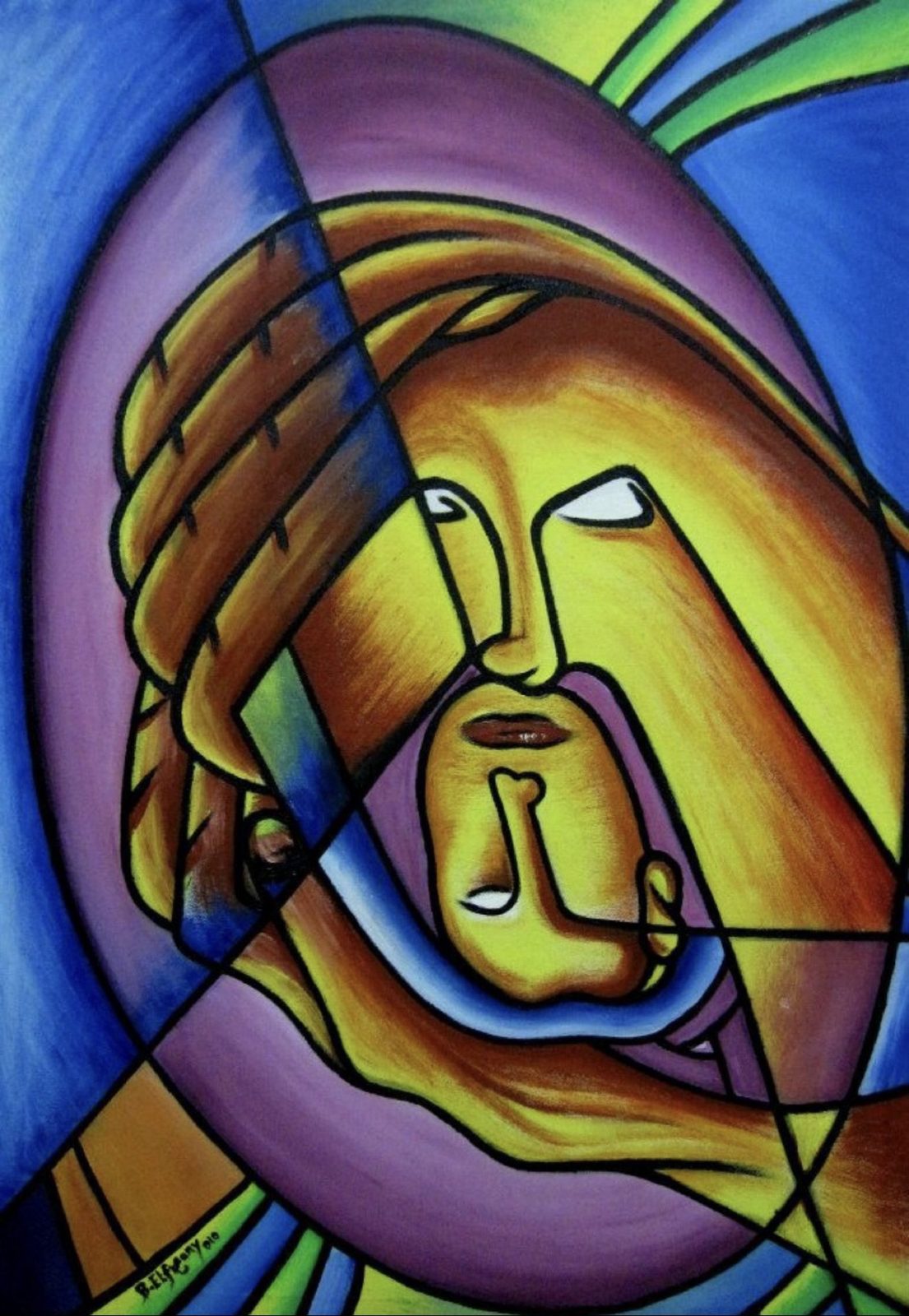
My Golden Face is a 24-by-30-inch original oil on canvas — the gold paint sits on the surface in layers you can see from across the room. A print of it would show you the image. The original shows you the painting.
What I sell in my studio
Here is my policy, and it will not change: every painting I sell is the single original, and I never print my work. When a piece leaves my studio, it is the one and only, with a signed certificate and my signature on the canvas. No editions, no reproductions, no surprises.
That is how art has always worked at its best. One painter, one painting, one collector — and a story that travels with the work.
Thinking about a piece? Write to me at [email protected] — tell me what catches your eye and I will answer every question about the painting, the certificate, and getting the original safely to your wall.