This morning I read a headline that stopped me. The United States Pavilion at the Venice Biennale — the most famous art stage in the world — is about one million dollars short. Not short to open the show. The show already happened. The money is needed to take the work down and ship it home before the Biennale closes on November 22.
The pavilion presented Call Me the Breeze, by the sculptor Alma Allen, organized by commissioner Jenni Parido of the American Arts Conservancy. She has written an urgent letter asking for help. The U.S. government contributed $375,000 toward a pavilion that normally costs five to seven million dollars to run. This year there was no corporate or foundation funding behind it — only private citizens. And now, at the very end, there is not enough left to bring the art back to America.
I have never shown at Venice. But I know exactly the problem hiding inside that headline, because I live the small version of it every time a big painting leaves my studio.
The cost nobody sees
People see a painting on a wall and think the work is finished. For the artist, the wall is the middle of the story, not the end.
Big art is heavy, fragile, and expensive to move. My Three Fishes is 48 by 48 inches, oil on a solid wood panel — it does not roll up, it does not fold, and it cannot be treated like luggage. It needs a real crate, real padding, real insurance, and people who handle it like it matters. My murals run larger still: Egyptian Calling is a ceiling work of 16 by 33 feet, and New York Sky is 16 by 6 feet. Every foot of size multiplies the cost of crating, freight, and careful hands.
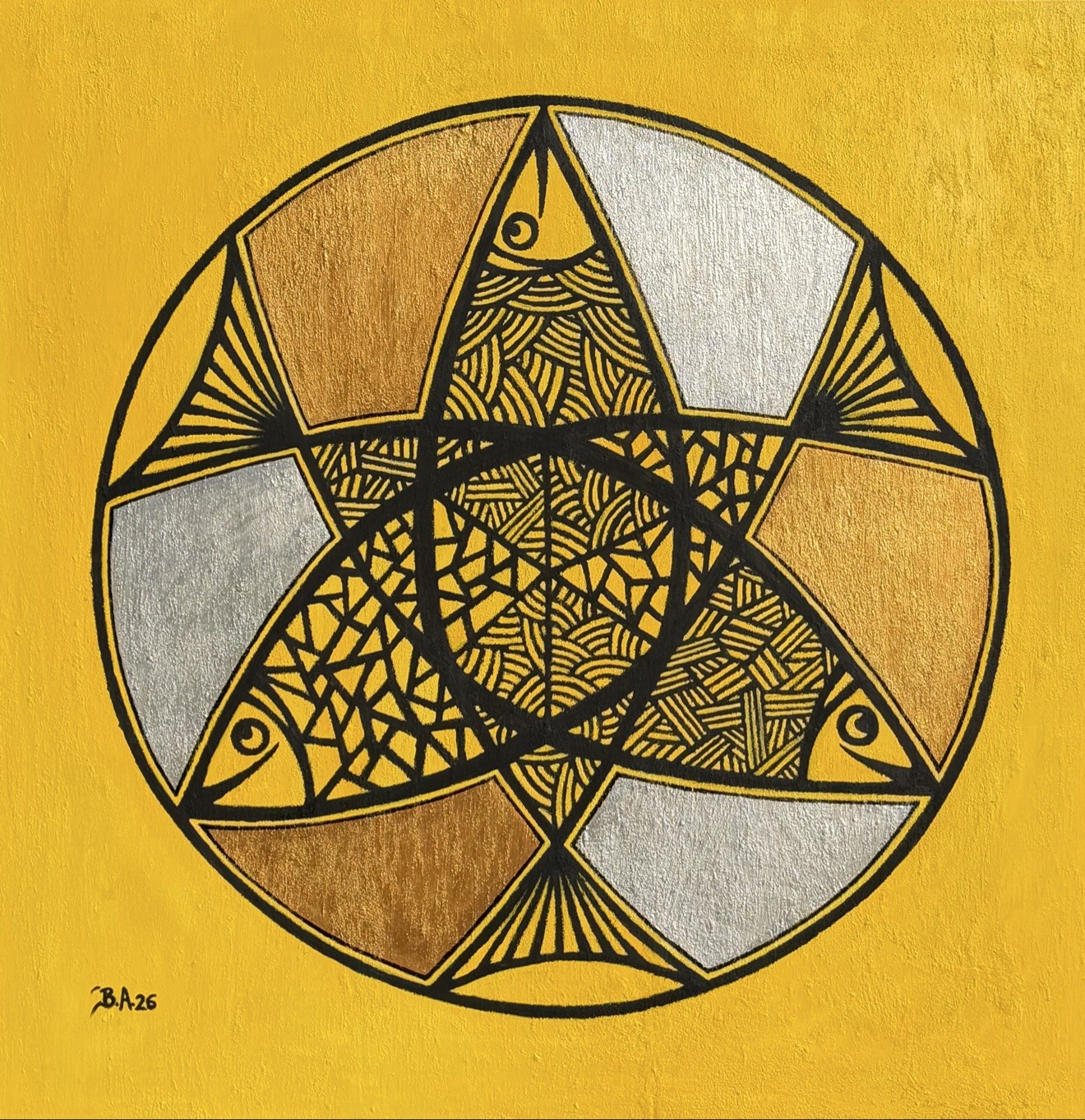
None of that cost appears in the photograph of the finished work. Nobody writes articles about crates and freight invoices. But if that money is not there, the art does not travel, does not show, and — as Venice just reminded everyone — sometimes cannot even come home.
Why private people have always carried art
What struck me most in the Venice story is who was missing and who was left. The big institutional money did not come this year. The government covered only a small part. In the end, the appeal went where art has always ended up: to private people who care.
That is not a weakness of art. That is its history. Long before museums and biennales, paintings survived because a person chose one, paid for it, hung it in a home, and kept it safe for decades. The collector is not a shopper at the end of the process. The collector is the reason there is a process at all.
I feel this in my own studio in California. I am a living artist, painting now. When someone collects one of my originals, they are not only buying paint on canvas — they are covering the years of work, the materials, the crating, the journey, and giving the painting the one thing every artwork needs: a wall where it will live and be looked at for years. A painting in storage is waiting. A painting in a home is alive.
What I take from Venice
There is something honest in this story, and I would rather learn from it than shake my head at it. It tells the truth about what art actually costs — not just to make, but to move, to show, and to bring safely home. Even at the very top of the art world, with the whole world watching, that truth does not change. Somebody still has to pay for the crate.
So when you support a living artist directly, understand what you are really doing. You are the funding. You are the shipping department and the museum and the safe arrival, all in one person who simply loved a painting enough to give it a home. Venice needs that kind of person right now at a very large scale. Artists like me meet that kind of person one painting at a time — and we never forget it.
If a painting of mine has caught your eye, or you would like an original made for your space, write to me at [email protected]. I answer collectors myself — and yes, I make sure the art gets home safe.