Buying art for someone else is one of the kindest gifts I can think of — and one of the easiest to get wrong. A painting stays on a wall for years. It is not a candle or a bottle of wine. Get it right, and the person thinks of you every day they walk past it. Get it wrong, and it quietly ends up in a closet.
I paint original oils in Riverside, California, and people write to me every season asking how to choose a gift piece. Here is the honest, practical way I walk them through it.
Start with their walls, not your taste
The first mistake is buying what you love. Your taste is not the gift. Before you look at a single painting, picture the person's home. What colors are already there? Is the room warm — wood, golds, creams — or cool, with blues, grays, and white? Is their style calm and simple, or bold and full?
If you can, notice their walls the next time you visit. A phone photo of the room, taken casually, is worth more than an hour of guessing. Collectors send me room photos all the time, and I can tell within minutes which palette will sit happily in that space.
Choose a feeling before a subject
Most people do not have strong opinions about subjects. They have strong feelings about how a room should feel. So choose the feeling first.
Blues calm a room down. My Blue Dream is the kind of piece people give for a bedroom, a reading corner, or a new home — it quiets a space without making it cold. Warm golds do the opposite. Golden Face, 24 by 30 inches in oil on canvas, brings light and welcome into an entry or a small living room, and it is a size that fits almost anywhere.

Think about the person, too. A painting about hope, rising, and new beginnings means something real to someone starting a new chapter — a wedding, a first house, a recovery, a new job. Art given at the right moment carries that moment with it for years.
Go size-safe
Size is where gifts fail most often. Too big, and it overwhelms their wall or will not fit at all. Too small, and it looks lost.
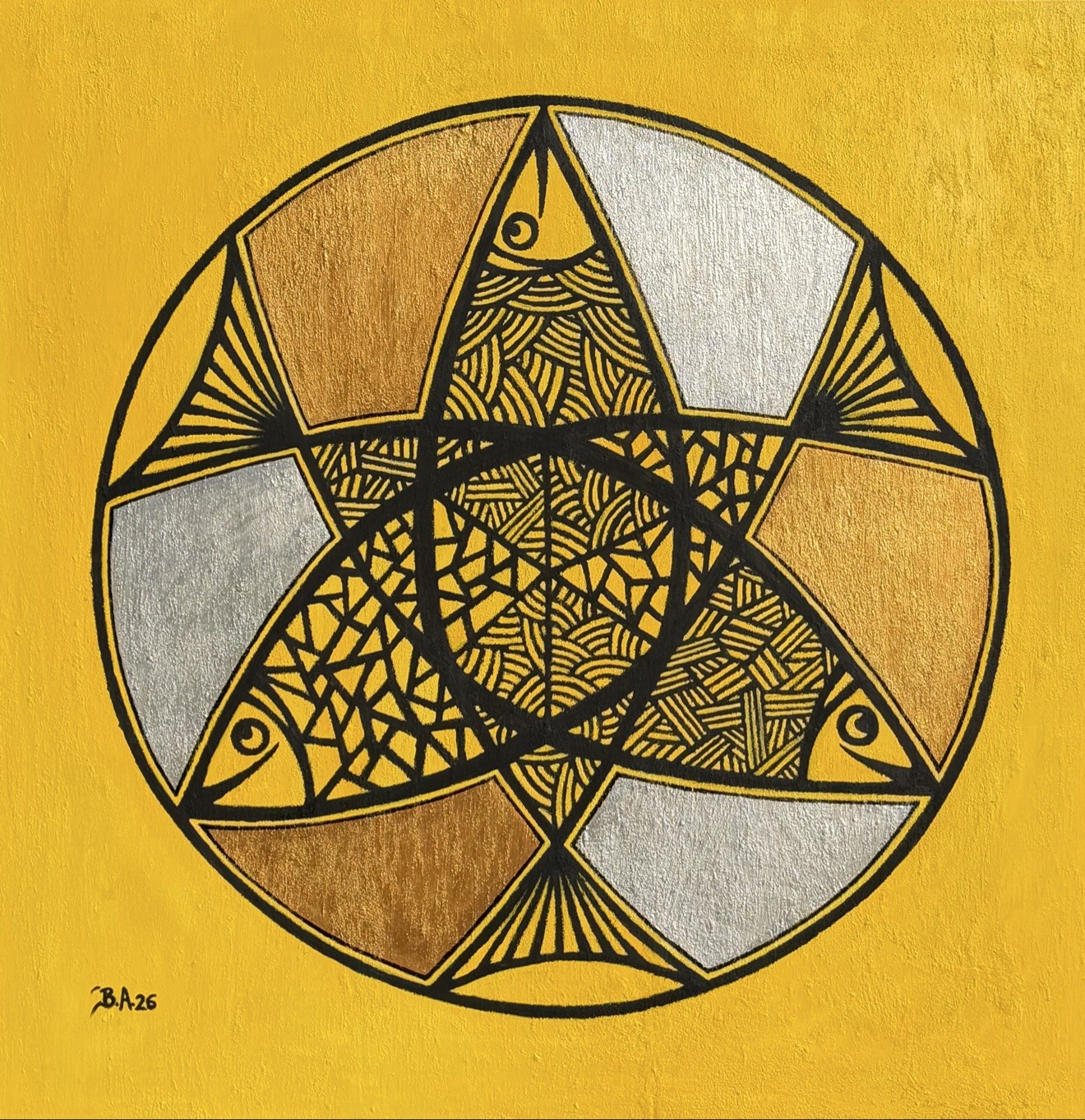
The safe range for a gift is the middle: a piece around 24 by 30 inches works above a console, in an entry, over a desk, or in a bedroom. It holds its own without demanding the whole room. Save the large statement pieces — like my Three Fishes, 48 by 48 inches in oil on wood panel — for people whose wall you know well, or for someone who has pointed at that painting and said, "That one."
When you truly do not know the space, a smaller original is never a wrong answer. A real painting, made by hand, carries weight at any size.
Ask the artist first
Here is the step most people skip, and it is the one that protects you: talk to the artist before you buy. Tell me who the gift is for, the occasion, and what their home looks like. I will tell you honestly which piece fits — and if none of mine does, I will say so.
Buying direct from a living artist also gives you things a store cannot. I can tell you the story behind the painting, so your gift arrives with meaning, not just a price tag. I can write a personal note to include with it. And because I am here, painting now, we can even talk about a custom piece in their colors, made for their wall — a commission is the most personal gift of all, if you have a few weeks to plan it.
A few occasions that call for art
A wedding gift that is not on any registry. A housewarming where the walls are still bare. A retirement, a milestone birthday, a thank-you too big for flowers. These are the moments people remember, and a painting marks them properly. It says: I thought about you, your home, and your life — not just your wishlist.
Give art the way you would want to receive it: chosen for their walls, their colors, and their story. Do that, and you will not get it wrong.
Looking for the right piece for your wall? Write to me at [email protected] — tell me who the gift is for and what their home looks like, and I will help you find the painting that belongs there.